
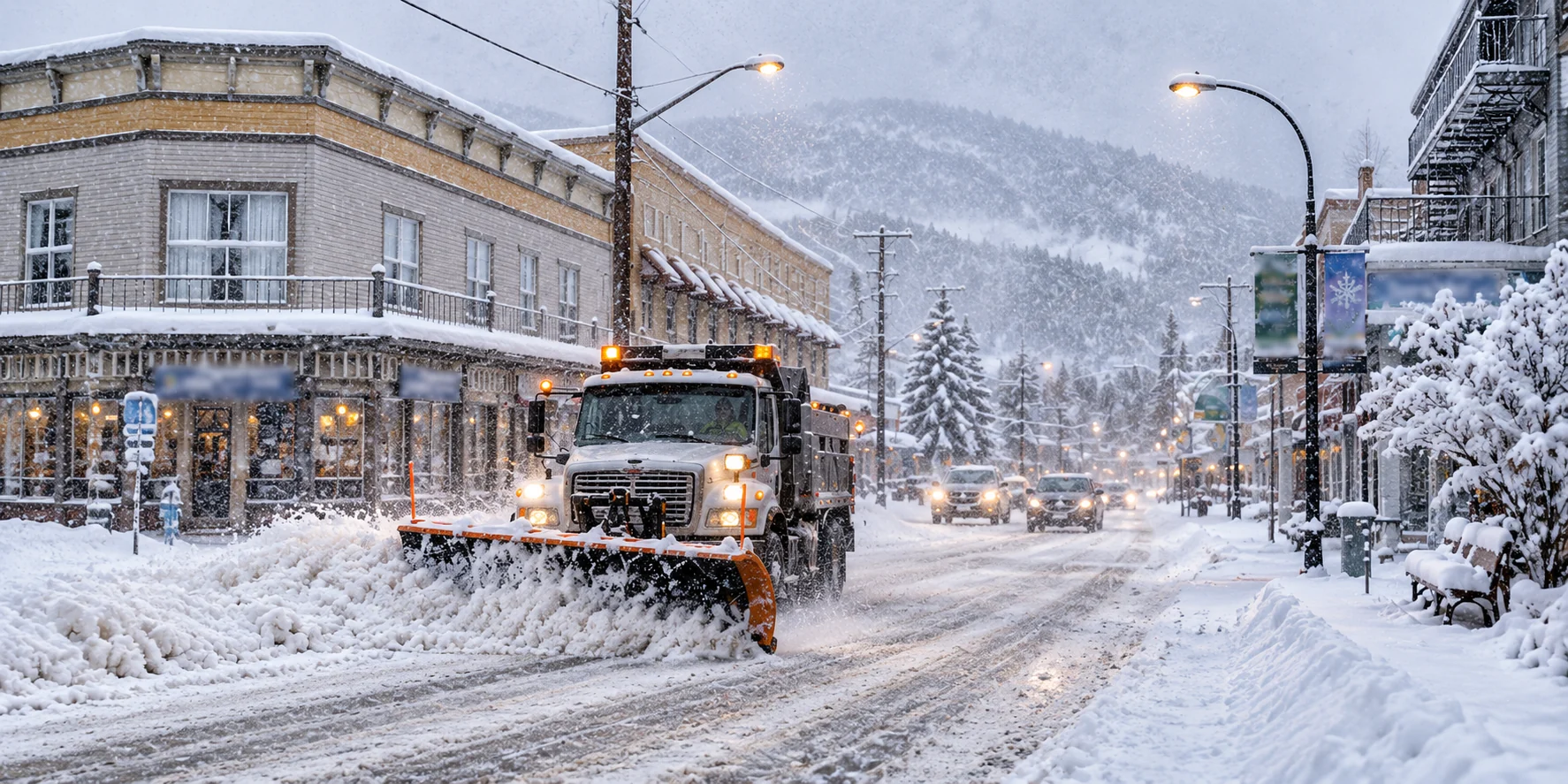
You’ve cleared the driveway. The car is ready to go. Then the snowplow comes along and leaves a ridge of heavy snow across the entrance.
It’s an aggravating part of winter in the North Okanagan, and one the people running the plows know about. But stopping to clear every driveway would mean other streets wait longer. Spallumcheen says its operators need to keep moving to get roads open safely, and Vernon points to more than 6,000 driveways within the city.
So whose road gets cleared first? That depends on where you live—and whether the road belongs to a municipality or the province.
Armstrong: Give the plows room
Armstrong’s Public Works Department looks after winter snow removal and ice control on city streets. The city asks residents to keep vehicles off the streets during a snowfall and until clearing operations are complete. Garbage and recycling containers should also stay off the road and sidewalk.
And don’t push or blow snow from your driveway onto the street. The city warns that extra piles create hazards for passing motorists.
Armstrong publishes a Winter Maintenance Policy for more detail about how it handles winter conditions. Residents with questions about a particular location can start with Public Works.
Spallumcheen: Two priorities across a rural road network
Spallumcheen maintains more than 200 kilometres of roads, including paved and gravel surfaces. Its snow and ice control policy places roads into two priority classes.
Priority 1 includes main arteries, collector roads, bus routes, hills and roads serving schools, public buildings and emergency services. Priority 2 follows once the first group has been addressed. The township says the immediate goal during a storm is to prevent blocked roads; afterward, crews work to return arterial roads as close to bare pavement as conditions allow.
That can mean a residential road waits while crews revisit a busier route.
Spallumcheen also has specific advice for the ridge of snow left across a driveway, known as a windrow. When you’re standing in your driveway looking toward the road, pile your shoveled snow on the right-hand side if you can. The township says that may reduce how much the next plow pushes back across your entrance.
The township does not clear private driveways. It also asks residents to keep trailers, vehicles and refuse containers off the roadside so equipment can get through. Property owners are responsible for sidewalk ice control under the township’s published guidance.
Its roads and snow-removal page includes the priority-road map, policy information and answers to common questions.
Vernon: Residential streets may take up to 72 hours
Vernon divides snow clearing into three levels. High-traffic streets—including 27th Street, 25th Avenue and Silver Star Road—along with school zones, bus routes and selected trouble spots come first. Residential roads and priority lanes follow. Other lanes and cul-de-sacs are last.
The city says residential streets can take up to 72 hours after snowfall ends to clear, depending on storm severity and conditions. During an ongoing storm, crews may have to keep returning to main routes to maintain access for emergency and transit vehicles.
Vernon also says property owners or occupants should clear snow and ice from sidewalks along their property within 24 hours after a snowfall. Some major sidewalks and civic routes are maintained by the city. Residents can report an uncleared sidewalk to Bylaw Enforcement at 250-550-3505.
As in Spallumcheen, the city does not clear snow left across private driveway entrances. Snow removed from driveways must stay on private property or approved areas—not be pushed back into the street.
Vernon’s snow and ice control page includes a route map and answers to common questions.
And if it’s a highway?
Not every road passing through a town is maintained by the town. Vernon notes that Highway 97 and Highway 6 are provincial responsibilities. The province contracts highway maintenance, including winter plowing, to private operators.
For the Okanagan–Shuswap maintenance area, the province lists AIM Roads and a 24-hour contact number: 1-866-222-4204. The provincial maintenance directory identifies contractors by service area.
If you’re unsure who maintains a road, check with your municipality or the province before reporting the problem.
A few things that make a difference
Keeping parked vehicles and bins out of the plow’s path helps crews reach more of the road. Putting shoveled snow back into the street does the opposite. And a road that hasn’t been plowed yet isn’t necessarily forgotten: it may simply be lower on the priority list.
The next time the plow leaves a windrow across your driveway, at least you’ll know why it happens—even if you still have to pick up the shovel.
This guide is based on information published by the City of Armstrong, Township of Spallumcheen, City of Vernon and Province of British Columbia. For current conditions, specific roads or unusual circumstances, contact the public works department or highway contractor responsible for the location.